
Lower Buttocks Lift
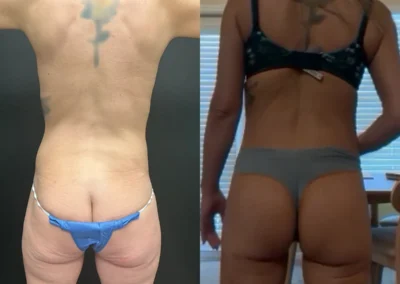
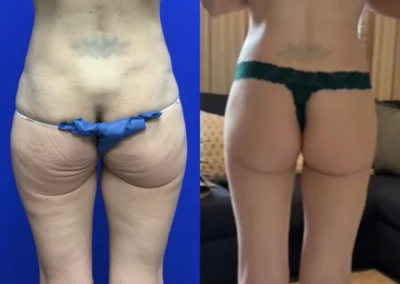
A lower buttocks lift—also referred to as lower buttock reshaping or buttock fold reshaping—is designed to redefine, support, and elevate the lower half of the buttocks. This procedure focuses specifically on the lower buttock and buttock fold, improving the contour, symmetry, and transition between the buttocks and upper thighs in patients with a long, deflated, or poorly supported lower buttock.
In patients with buttock deflation, Brazilian butt lift (fat transfer) is often helpful and commonly incorporated. However, a Brazilian butt lift alone may not be adequate to correct significant lower buttock droop, elongation, or loss of definition. Similarly, while a lower body lift can significantly improve the upper buttocks, it does not reliably lift or reshape the lower buttocks in cases of marked deflation or when insufficient volume is available to adequately fill the lower buttock. In these situations, a lower buttocks lift is often necessary to achieve the desired shape and balance.
Good Candidates for a Lower Buttocks Lift
Patients who benefit from a lower buttocks lift include those who have experienced significant weight loss, age-related deflation, or lifelong lack of definition in the lower buttock. It is also well suited for patients with asymmetry, uneven buttock folds, or excessive length of the lower buttock that creates a sagging, bottom-heavy appearance.
Importantly, this procedure is not limited to massive weight-loss patients. Many patients with low buttock volume—regardless of BMI, including low-BMI patients—seek lower buttock reshaping to shorten a long buttock, improve projection, or correct shape deficiencies that cannot be addressed with fat transfer alone. It is also frequently used to correct asymmetries or reshape buttocks that remain deflated or poorly supported after prior Brazilian butt lift.
Standalone vs. Combined Approach
A lower buttocks lift can be performed as a standalone procedure in appropriately selected patients. In these cases, the goal is to shorten and support the lower buttock, redefine the buttock fold, and improve contour without additional lifting procedures.
More commonly, lower buttock reshaping is performed as part of a combined approach, depending on anatomy and goals. This may include Brazilian butt lift (fat transfer), waist and hip contouring, lower body lifting, and/or medial thigh lifting. In patients with significant deflation, fat transfer is often incorporated to restore volume while the lower buttocks lift reshapes and supports the lower buttock for improved projection and balance. Whether procedures are performed in one stage or staged is determined during consultation to optimize safety and durability of results.
Surgical Concept and Scar Placement
The incision for a lower buttocks lift is placed within the natural buttock crease and carefully designed to remain well concealed beneath the buttocks. The goal is to reshape and support the lower buttock while minimizing visible scarring and avoiding extension onto the hip or lateral thigh.
This procedure shortens the lower buttock visually and anatomically, correcting the “long buttock” appearance that is common after weight loss, aging, or inadequate support from prior procedures. When performed correctly, the scar remains hidden in the buttock fold and heals favorably over time.
Experience Matters
Lower buttock reshaping is a technically demanding procedure that requires precise understanding of buttock anatomy, tension vectors, and scar placement. When performed by low-volume surgeons, complication and revision rates are significantly higher, and outcomes may include recurrent sagging, asymmetry, or contour deformities.
Dr. Cabbabe is an internationally recognized, high-volume expert in body contouring, lower body lifting, and lower buttock reshaping, and frequently lectures on these topics. The technical details—often overlooked—are critical not only for healing, but for achieving the best possible result for each patient’s anatomy and minimizing the need for revision surgery.

Recovery and Expectations
Lower buttocks lift surgery is typically performed as a short, outpatient procedure. Discomfort is most noticeable during the first week and gradually improves. Most patients can resume light activity within a few weeks, depending on whether additional procedures are performed. Scar maturation continues for a year or longer, with progressive softening and fading over time.
Important Considerations About Skin Quality
Skin quality remains a limiting factor in any reshaping procedure. Patients with poor skin quality, very thin or damaged skin, or significant prior liposuction may experience less predictable results. In these cases, small secondary refinements may occasionally be required due to the limitations of the skin itself. When needed, these secondary adjustments can often be performed in the office setting.